Uncategorized
Springfree Trampoline Weight Limits: Everything You Need to Know
When you’re shopping for a trampoline, weight limits are one of the first things to check. If the trampoline can’t handle your kids, teens, or even adults, it won’t be safe or last very long. Springfree trampolines are famous for their springless design and safety features — but how much weight can they really hold?
This guide breaks down the Springfree trampoline weight limits by model, explains the difference between “jumper” and “structural” limits, compares Springfree with major competitors, and answers the most common questions buyers ask.
Understanding Trampoline Weight Limits
Not all weight ratings mean the same thing. Springfree trampolines publish two separate limits:
-
Single Jumper Weight Limit
The maximum recommended weight for one person bouncing. This is the safety limit because jumping generates forces far greater than body weight. -
Structural (Static) Load Capacity
The total amount of weight the trampoline can hold at rest without collapsing or bending. This is often much higher but doesn’t apply to active bouncing.
👉 Example: A 220-lb person landing from a jump might exert 600 lbs or more of force. That’s why the jumper limit is set lower than the frame’s static strength.
Springfree Trampoline Weight Limits by Model
Here’s a complete rundown of Springfree’s trampolines, including both single jumper and structural load capacities:
| Model (Code) | Size & Shape | Single Jumper Limit | Structural Load Limit |
|---|---|---|---|
| Mini Round (R30) | 6 ft round | 175 lbs (79 kg) | 1,300 lbs (590 kg) |
| Compact Round (R54) | 8 ft round | 175 lbs (79 kg) | 1,300 lbs (590 kg) |
| Medium Round (R79) | 10 ft round | 220 lbs (100 kg) | 1,500 lbs (680 kg) |
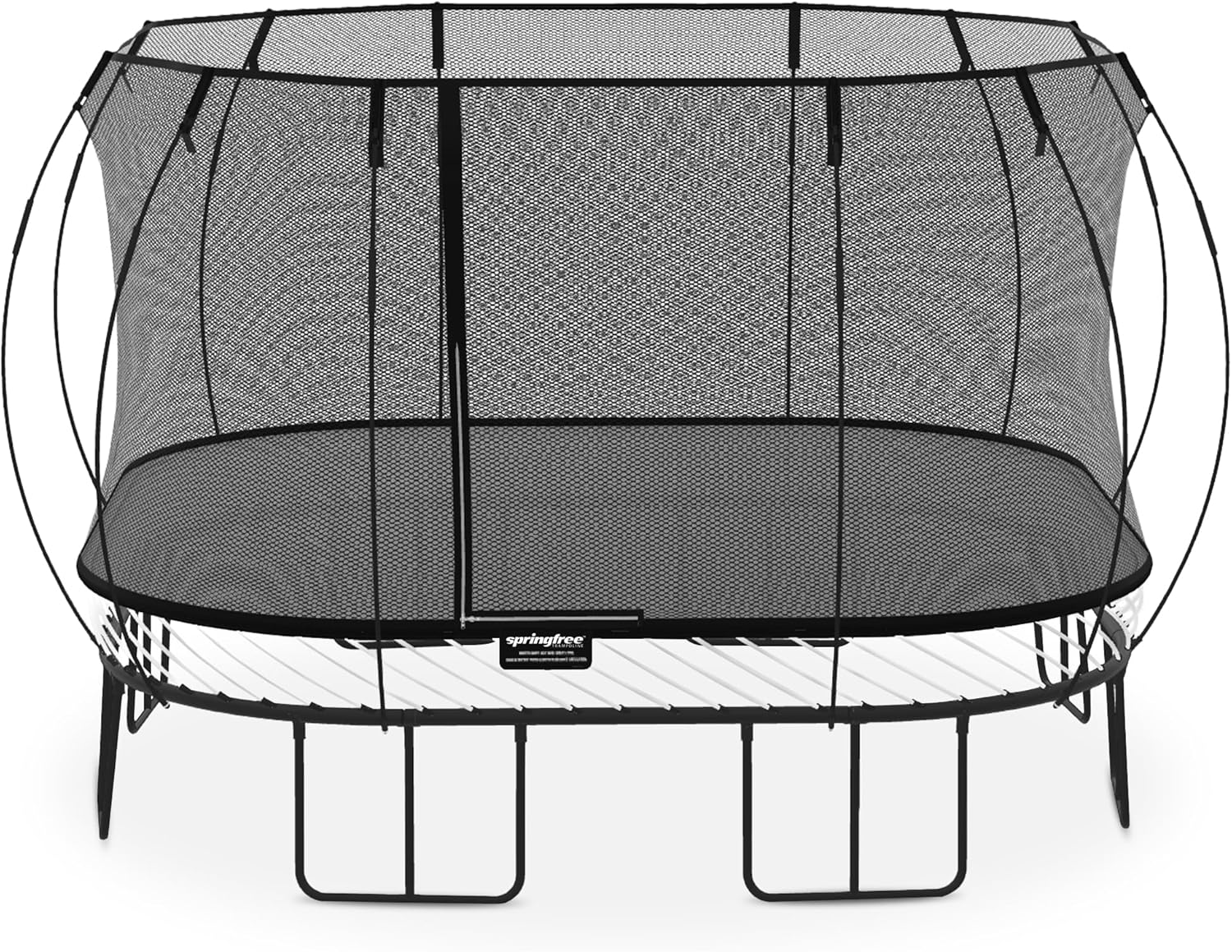
| Compact Oval (O47) | 6 × 9 ft oval | 175 lbs (79 kg) | 1,300 lbs (590 kg) |
| Medium Oval (O77) | 8 × 11 ft oval | 220 lbs (100 kg) | 1,500 lbs (680 kg) |
| Large Oval (O92) | 8 × 13 ft oval | 220 lbs (100 kg) | 1,500 lbs (680 kg) |
| Jumbo Oval (O200) | 12 × 19 ft oval | 220 lbs (100 kg) | 1,500 lbs (680 kg) |
| Large Square (S113) | 11 × 11 ft square | 220 lbs (100 kg) | 1,500 lbs (680 kg) |
| Jumbo Square (S155) | 13 × 13 ft square | 220 lbs (100 kg) | 1,500 lbs (680 kg) |
Key takeaway:
-
Smaller models (Mini/Compact) = 175 lbs jumper limit / 1,300 lbs structural.
-
Medium and larger models = 220 lbs jumper limit / 1,500 lbs structural.
Yes, Springfree trampolines are literally strong enough to support a small car on the mat — but the real safety limit for bouncing is 175–220 lbs per person.
How Springfree Compares to Other Trampoline Brands
Springfree isn’t the only premium trampoline on the market. Here’s how its weight ratings compare with other major brands:
| Brand / Model | Size Example | Single Jumper Limit | Structural Capacity |
|---|---|---|---|
| Springfree (Large/Jumbo) | 11–13 ft square / 12×19 ft oval | 220 lbs | 1,500 lbs |
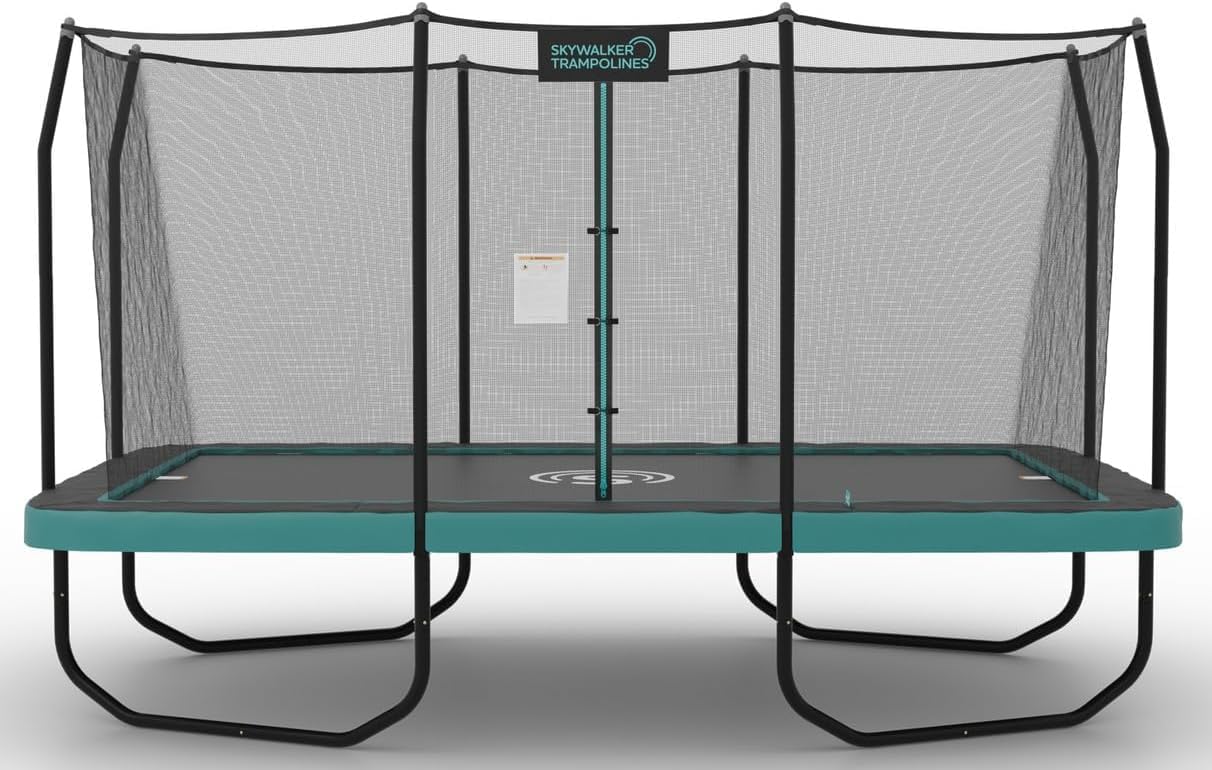
| Skywalker 15′ Round | 15 ft round (springs) | 200 lbs | ~800 lbs |
| JumpSport / AlleyOOP 14′ | 14 ft round | 245–270 lbs | ~800 lbs |
| ACON Air 16 Sport HD | 16 × 10 ft rectangle | 330 lbs | 1,650 lbs |
| Vuly Thunder Pro (Large) | ~14 ft round (springless) | 330 lbs | 1,650 lbs |
Highlights:
-
Springfree = strongest safety-first design, very sturdy 1,500-lb frames, but capped at 220 lbs per jumper.
-
ACON & Vuly = better for heavier adults, with jumper limits of 330 lbs and structural loads of 1,650 lbs.
-
JumpSport = solid mid-tier, ~250 lbs jumper, ~800 lbs structural.
-
Skywalker = most budget-friendly, but lower strength (~200 lbs jumper).
Common Questions About Weight Limits
Why is the jumper limit lower than the structural limit?
Jumping multiplies weight forces. A person at 220 lbs can land with more than 600 lbs of force. The jumper limit prevents bottoming out.
Can multiple kids jump if their combined weight is under the limit?
Not safely. Trampolines are designed for one jumper at a time. Collisions are the #1 cause of trampoline injuries.
What happens if you exceed the limit?
You risk overstressing the mat, bending rods, or damaging the frame. It can also void the warranty.
Are Springfree trampolines suitable for adults?
Yes, as long as the adult is under 220 lbs. Heavier adults should consider ACON or Vuly.
Does weather affect weight safety?
Yes. Snow and ice add static load. Always clear buildup to protect the frame.
Do trampolines weaken over time?
Yes. UV exposure, heavy use, and age can reduce strength. Regular inspections help catch wear early.
Safety & Longevity Tips
-
Always follow the published jumper limits.
-
Limit use to one jumper at a time.
-
Clear off snow or water buildup to avoid frame stress.
-
Inspect mats, rods, and frames regularly.
-
Respect warranty conditions to keep coverage.
Who Should Choose a Springfree Trampoline?
Springfree is the right choice if you:
-
Want the safest trampoline design (no springs, hidden frame).
-
Have kids or teens under the 175–220 lb limits.
-
Value long-term durability and a strong static frame.
-
Prefer safety over maximum adult jumper capacity.
If you want a trampoline for heavier adults (230–300+ lbs), consider ACON or Vuly.
Conclusion
Springfree trampolines are built with exceptional structural strength (1,300–1,500 lbs) and safe jumper limits of 175–220 lbs, depending on the model. That makes them more than strong enough for families, while keeping safety at the forefront.
If you need a trampoline that balances safety engineering, durability, and family-friendly design, Springfree is hard to beat. If you need higher adult weight capacity, look at ACON or Vuly — but expect to sacrifice some of Springfree’s unique safety features.
Top Garden Trampolines for Safe Backyard Fun
Click Here For Our Favorite Garden Trampoline
When considering the best heavy-duty trampoline options for a garden, the focus shifts from sheer performance to aesthetic integration and discreet placement. Garden trampolines should not only perform well, but also blend beautifully into your outdoor space without overwhelming it.
This guide reviews the top trampoline models that deliver both form and function, with in-ground options and sleek above-ground designs perfect for maintaining the visual appeal of your garden.
Why Garden Trampolines Are Different
While traditional trampolines prioritize bounce height and durability, garden trampolines must also:
- Blend into the landscaping (low profile or neutral tones)
- Provide safety for kids and adults
- Resist the elements (UV protection, rust resistance)
- Minimize visual bulk (in-ground options are ideal)
Top Pick: Avyna Pro-Line In-Ground Trampoline
- Installation: In-ground (sits flush with lawn or patio)
- Aesthetic: “Discreet and seamless” design that integrates into any outdoor space
- Frame: 11- and 14-gauge hot-dipped galvanized steel
- Weight Capacity: 1,750 lbs tested
- Bounce: Powerful, ideal for adults and athletic users
- Warranty: Lifetime on frame
- Considerations: Requires excavation for installation
The Avyna Pro-Line is the gold standard for garden trampolines. By sitting at ground level, it eliminates visual clutter while maintaining a pro-level bounce. If you want a trampoline that won’t dominate your garden’s appearance, this is it.
Other Excellent Garden-Friendly Trampolines
🏅 Jumpflex HERO™
- Style: Sleek frame with a modern look
- Frame: High-tensile steel with UV-tested netting
- Aesthetic: Described as “sleek” and “good looking”
- Bounce: Smooth and deep with a 550 lb weight capacity
- Great For: Those wanting an above-ground option with stylish appeal
🌱 Springfree Trampoline
- Design: Springless construction with hidden frame
- Safety & Looks: No exposed springs; comes in 7 color options
- Visual Appeal: Frequently praised for adding to backyard beauty
- Great For: Safety-focused buyers who value clean aesthetics
🌿 AlleyOOP Trampoline
- Build: Extremely durable above-ground model
- Color Scheme: Dark green pads designed to blend with landscape
- Performance: High bounce with customizable spring systems
- Note: Still a visible structure but less jarring due to natural tones
✅ Zupapa 15-Foot Saffun & ⚙️ Vuly Thunder 2 Pro
- Durability: Both are top-tier in construction quality
- Garden Fit: Functional and safe, but more visually prominent
- Best For: Larger gardens where space is not a constraint
 Click here to learn more about this trampoline
Garden Trampoline FAQ
What’s the best trampoline for a small garden?
For compact spaces, consider an in-ground trampoline like the Avyna Pro-Line or a small round model like the Springfree 8ft. These minimize visual impact and fit better in tight areas.
Are in-ground trampolines safer than above-ground models?
Yes, they reduce fall height and eliminate the need for a ladder. However, they still require a safety net and proper drainage underneath.
Do I need to excavate for an in-ground trampoline?
Yes. In-ground models like the Avyna Pro-Line require digging a pit to accommodate the frame and bounce depth. This adds installation cost but greatly improves aesthetics.
Will a trampoline ruin my lawn or garden?
It can if left unchecked. Rotate above-ground trampolines periodically, use grass protection mats, or opt for in-ground styles to maintain your lawn’s health.
What should I look for in a garden trampoline?
Prioritize weather-resistant frames, UV-stable mats, enclosure safety, and colors that match your landscape. If visual appeal matters, avoid bright colors and bulky frames.
Can adults use garden trampolines too?
Yes! Many models like the Avyna and Jumpflex are rated for 300–550 lbs and provide excellent bounce for all ages.
Final Thoughts
If your goal is to preserve your garden’s beauty while adding a fun, high-performance trampoline, opt for:
- In-ground trampolines like the Avyna Pro-Line for seamless integration
- Sleek above-ground models like Jumpflex or Springfree for style-conscious families
A garden trampoline should enhance your outdoor space—not compete with it. Choose a model that complements your landscape and provides lasting fun for both kids and adults.
Best Heavy-Duty Trampolines for Adults (2026 Buyer’s Guide)
Click Here For Our Favorite Heavy-Duty Trampoline
If you’re an adult shopping for a trampoline, the standard backyard models designed for kids won’t cut it. You need a heavy-duty trampoline — one that’s engineered for higher weight loads, more powerful bounce, and the kind of frame construction that holds up to years of regular use.
Whether your goal is fitness, recreational fun, or practicing flips and aerial tricks, the right heavy-duty trampoline makes all the difference. In this guide, we break down what actually makes a trampoline “heavy-duty,” compare the best models for adult jumpers in 2026, and help you pick the right one based on your weight, space, and intended use.
What Makes a Trampoline “Heavy-Duty”?
Not every trampoline marketed as “heavy-duty” actually earns the label. When evaluating trampolines for adult use, there are five key factors that separate a genuinely durable, high-performance model from one that’s just bigger than a kids’ trampoline.
High weight capacity is the most obvious requirement. Look for a single-user weight limit of at least 250 lbs, with a structural (static) load capacity of 1,000 lbs or more. Keep in mind that these two numbers mean very different things — the single-user limit accounts for the dynamic force generated when jumping, which can be two to three times your body weight on impact. To understand the difference between single-user and structural weight ratings, see our guide to trampoline weight limits.
Reinforced frame construction is equally critical. The best heavy-duty trampolines use hot-dipped galvanized steel (coated both inside and out) or powder-coated steel with wall thicknesses of 2mm or more. Thicker frame tubes — typically 1.9 inches to 2.4 inches in diameter — resist bending and warping under repeated stress far better than the thinner tubing found on budget models.
Performance-grade springs are what deliver the bounce adults actually want. Longer springs (8.5 to 10 inches) stretch further and produce a smoother, more powerful rebound compared to the shorter 7-inch springs on most consumer trampolines. Double-galvanized coatings prevent rust and extend spring life. Some brands also offer dual-stage or adjustable spring systems that let you tune the bounce to your weight and skill level. Our guide to trampoline springs goes deeper on this topic.
Durable materials throughout the trampoline — UV-resistant polypropylene mats, weatherproof PVC safety padding, and reinforced stitching (8 to 10 rows) — are signs that the manufacturer built for longevity rather than a low price tag.
Warranty coverage tells you a lot about the manufacturer’s confidence in their product. A lifetime frame warranty is the gold standard. Pay attention to how long the springs, mat, and safety padding are covered — short warranties on these parts (1–2 years) often signal that you’ll be replacing components sooner than you’d like.
Quick Comparison: Best Heavy-Duty Trampolines for Adults
| Trampoline | Size | Single-User Weight Limit | Structural Capacity | Spring Type | Frame Warranty | Best For |
|---|---|---|---|---|---|---|
| Avyna Pro-Line 10×17 | 10 x 17 ft (rectangular) | Not specified (tested to 1,100 lbs dynamic) | 1,750 lbs | 134 double-galvanized 8.5″ springs | Lifetime | Serious jumpers, flips, athletic training |
| ACON Air 16 HD | 10 x 17 ft (rectangular) | No single-user limit (ASTM certified 330 lbs) | 1,650 lbs | 140 galvanized 10″ springs (Piano Wire upgrade available) | 10 years | Families, gymnasts, trickers |
| AlleyOOP 10×17 PowerBounce | 10 x 17 ft (rectangular) | 350 lbs | 800+ lbs (real-world tested) | 92 primary + 72 PowerBounce springs (adjustable) | Lifetime | High-performance bouncing, customizable feel |
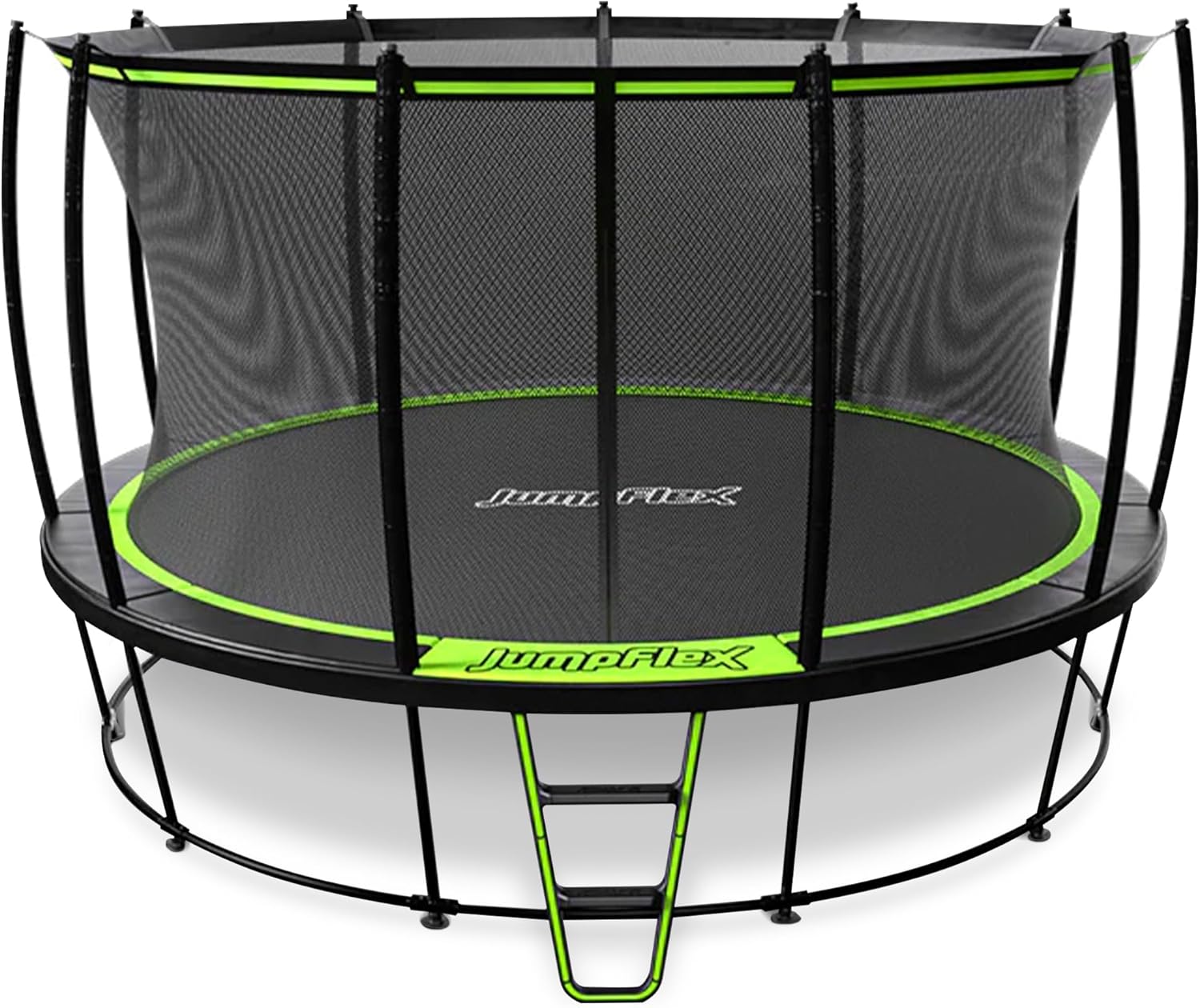
| Jumpflex HERO 14ft | 14 ft (round) | 350 lbs (individual) | 550 lbs (total) | High-tensile extension springs | 10 years | Larger adults, families, value pick |
| Zupapa 15ft Saffun | 15 ft (round) | 425 lbs | Not specified | 108 galvanized springs | 10 years | Budget-friendly family use |
| Vuly Thunder Pro | Various (round) | 330 lbs per user | 1,650 lbs | Patented Leaf Spring system (no coils) | 10 years | Safety-focused adults, low-impact bouncing |
Click Here For Our Favorite Heavy-Duty Trampoline
Avyna Pro-Line 10×17 — Best Overall for Adults
The Avyna Pro-Line is arguably the gold standard for heavy-duty backyard trampolines. Designed and engineered in the Netherlands, this rectangular trampoline combines industrial-grade materials with a bounce experience that satisfies everyone from casual adult jumpers to competitive gymnasts.
The frame uses thick, hot-dipped galvanized high-tensile steel (11 and 14 gauge) with zinc coating applied both inside and out. This process creates a rust-proof frame that Avyna backs with a lifetime warranty — and given that this trampoline has been tested to support over 1,100 lbs of dynamic load (with a 1,750-lb maximum structural capacity), it’s clear the engineering holds up.
With 134 double-galvanized 8.5-inch springs and Avyna’s Air X-TREAM jumping mat — a polypropylene mat with 70% more air permeability than standard mats — the bounce is powerful, responsive, and notably smooth. The mat’s built-in 4-inch spring protection flap adds a layer of safety, and the PVC D-rings with internal galvanized steel plates provide a more durable attachment point than the punched grommets found on cheaper trampolines.
The optional safety enclosure uses curved poles that maximize usable jumping space, and the lockable entrance adds security for families with younger children who also use the trampoline.
Avyna also offers this model as an in-ground trampoline, which sits flush with the yard for a sleeker look and added stability.
Weight capacity: 1,750 lbs structural (tested to 1,100 lbs dynamic) · Springs: 134 × 8.5″ double-galvanized · Frame: 11/14-gauge hot-dipped galvanized steel · Mat: UV-protected polypropylene with Air X-TREAM design · Warranty: Lifetime (frame), 10 years (springs), 3 years (mat and pad) · Price range: ~$3,200–$3,400 (above-ground with enclosure)
ACON Air 16 HD — Best for Gymnasts and Trickers
ACON has built a reputation among gymnasts, trickers, and serious athletes — and the 16 HD is their flagship rectangular model. At 10 x 17 feet, it matches the Avyna in size but takes a different approach to design, particularly with its “no single-user weight limit” philosophy and optional Piano Wire Performance Springs.
The frame is made from 2.4-inch diameter steel tubes with 2.5mm wall thickness, black powder-coated inside and out. While ACON warrants the frame for 10 years (compared to Avyna’s lifetime), the construction is undeniably robust, with a 1,650-lb static load capacity. The trampoline comes standard with 140 galvanized 10-inch springs — longer than most competitors — which produce exceptional height and energy return.
For jumpers who want even more performance, ACON’s Piano Wire Performance Springs are available as an upgrade. These springs provide 200% better fatigue resistance, greater stretch, and a smoother rebound. Combined with the standard springs, you can customize the bounce character over time as your skills develop.
ACON’s newer HD models also feature their SafeMat system — a 2-inch foam buffer around the mat perimeter plus a spring-covering skirt that shields jumpers from contact with the springs. The No Finger Access mesh enclosure adds further protection.
The trade-off with ACON is warranty depth on non-frame parts: the safety pad is covered for just 2 years, and the enclosure net for 1 year. For a trampoline in this price range (~$2,000–$2,800), you may need to budget for pad and net replacements down the line. That said, ACON keeps all replacement parts in stock, which makes long-term ownership practical. For more on how ACON stacks up against other top brands, see our trampoline brand comparison guide.
Weight capacity: No single-user limit (ASTM/CE certified at 330 lbs); 1,650 lbs structural · Springs: 140 × 10″ galvanized steel (Piano Wire upgrade available) · Frame: 2.4″ diameter, 2.5mm wall, black powder-coated steel · Mat: UV-treated polypropylene · Warranty: 10 years (frame), 5 years (springs, mat), 2 years (pad), 1 year (net) · Price range: ~$2,000–$2,800
AlleyOOP 10×17 PowerBounce — Best Adjustable Bounce System
If customization matters to you, the AlleyOOP PowerBounce is in a class of its own. Built by JumpSport — the company that invented the trampoline safety net — this rectangular trampoline is the only model on the market that lets you genuinely tune the bounce for different skill levels, weights, and ages.
The PowerBounce system uses a dual-spring design: 92 primary 10-inch zinc-plated springs plus 72 secondary PowerBounce springs that engage in stages. The primary springs handle the initial landing and cushion, while the secondary springs kick in to propel you back up with additional force. You can adjust the PowerBounce assemblies to make the surface softer or more powerful, which means the trampoline grows with you — or adapts for different family members.
The frame is heavy-duty galvanized steel, 2 inches in diameter with 2.5mm wall thickness and a textured forest-green powder-coat finish. AlleyOOP also uses their Permatron mat, which features 10 rows of stitching (industry-leading durability) and connects to the springs via looped straps and steel V-rings rather than punched grommets — a design choice that significantly reduces mat tearing.
Safety is where AlleyOOP truly differentiates. The Triple-Fail-Safe enclosure uses 8 padded poles and has been rated to withstand a 295-lb impact — the highest enclosure impact rating in the industry. The overlapping doorway eliminates fall-outs (no zipper to forget to close), and built-in rest zones let kids wait their turn safely on the thick gym-quality pad without exiting the trampoline.
The warranty is strong: lifetime on the frame and poles, 10 years on the mat and net, 5 years on springs, and 2 years on the pad. Assembly is the main drawback — expect to spend 3–4 hours with two people. For a deeper look at the full AlleyOOP lineup, read our AlleyOOP trampoline review.
Weight capacity: 350 lbs single-user (real-world tested to 800+ lbs combined) · Springs: 92 primary (10″) + 72 PowerBounce (adjustable) · Frame: 2″ diameter galvanized steel, 2.5mm wall · Mat: Permatron with 10-row stitching, UV-protected · Warranty: Lifetime (frame/poles), 10 years (mat/net), 5 years (springs), 2 years (pad) · Price range: ~$3,000–$3,500
Jumpflex HERO 14ft — Best Round Trampoline for Adults
Not every adult needs a full-size rectangular trampoline. If you’re looking for a round model that can genuinely handle adult weight without compromising on bounce quality, the Jumpflex HERO 14ft is one of the strongest options in its class.
The HERO uses a patented DualRing frame design — a top ring of 1.7-inch high-tensile steel tubing connected to a bottom ring of 1.5-inch tubing — that creates a more rigid, stable structure than the single-ring designs used by most round trampolines. Jumpflex rates the total weight capacity at 550 lbs with an individual user limit of 350 lbs, which puts it well above the typical 200–250 lb limit found on standard 14-foot trampolines.
The high-tensile extension springs are designed for a deep, smooth bounce with plenty of airtime. While the spring length isn’t listed as prominently as some competitors, user reviews consistently praise the bounce quality for both kids and adults. The 12.1-foot jumping mat provides a generous surface area, and Jumpflex’s eco-friendly design uses zero bolts and no welds, which cuts assembly time roughly in half compared to traditional trampolines.
The frame carries a 10-year warranty, and recent customer reviews from early 2026 highlight easy setup and whole-family enjoyment. At a price point significantly below the premium rectangular models, the HERO offers strong value for adults who want durability without spending $3,000+.
Weight capacity: 350 lbs individual / 550 lbs total · Frame: DualRing high-tensile steel · Mat: 12.1 ft diameter · Warranty: 10 years (frame) · Price range: ~$700–$1,000
Zupapa 15ft Saffun — Best Budget-Friendly Option
For adults who want a solid, reliable trampoline without a premium price tag, the Zupapa 15ft Saffun delivers more durability and weight capacity than you’d typically expect from a trampoline in its price range.
With a 425-lb weight capacity, the Zupapa comfortably supports adult jumpers. The galvanized steel frame uses full-length enclosure poles that extend all the way to the ground for extra stability, and the six W-shaped legs distribute weight evenly. It comes with 108 galvanized springs that produce a balanced, stable bounce — not as powerful as the rectangular models above, but smooth and predictable.
Zupapa includes a generous accessory bundle out of the box: a ladder, rain cover, wind stakes, and a T-hook for spring installation. The frame carries a 10-year warranty, though it’s worth noting that the mat, padding, net, and springs are only covered for 2 years — meaning you may need to replace some components before the frame warranty expires.
As a practical, all-in-one package for families where adults also want to jump, the Zupapa Saffun is hard to beat on value. For a more thorough comparison of trampolines in this price range, check out our ultimate trampoline buying guide.
Weight capacity: 425 lbs · Frame: Galvanized steel with full-length poles · Springs: 108 galvanized · Warranty: 10 years (frame), 2 years (mat/pad/net/springs) · Price range: ~$500–$720
Vuly Thunder Pro — Best Springless Option
If traditional coil springs concern you — whether for safety reasons or joint comfort — the Vuly Thunder Pro offers a fundamentally different approach. Instead of metal coils, it uses a patented Leaf Spring system: curved, flexible composite rods that provide bounce without the pinch points, noise, and uneven wear that come with traditional springs.
The result is a bounce that’s noticeably more vertical and controlled. Where coil-spring trampolines can send you slightly sideways on an off-center landing, the Leaf Spring design corrects toward center, making it inherently safer for less experienced jumpers. The low-impact rebound is also significantly easier on joints, which makes it appealing for adults using the trampoline for fitness or rehab purposes.
Vuly rates the Thunder Pro at 330 lbs per user with a structural capacity of 1,650 lbs. The frame uses powder-coated steel with reinforced joints, and the safety enclosure integrates tightly with the trampoline to minimize gaps. Vuly’s enclosure poles use a curved design that stays further from the jumping area than typical straight-pole enclosures.
The main downside is warranty coverage on the non-frame components. While the frame itself is covered for 10 years, the net and Leaf Springs carry a shorter warranty period. Given the premium pricing (comparable to Avyna and AlleyOOP), replacement costs for these components are worth factoring into the total cost of ownership.
For adults who prioritize safety, vertical bounce, and joint protection above all else, the Vuly Thunder Pro is a compelling choice. If you’re also considering springless designs from other brands, our trampoline safety guide covers the key differences.
Weight capacity: 330 lbs per user / 1,650 lbs structural · Spring type: Patented Leaf Springs (no metal coils) · Bounce style: Vertical, controlled, low-impact · Frame: Powder-coated steel · Warranty: 10 years (frame) · Price range: ~$1,000–$2,000+
Click Here For Our Favorite Heavy-Duty Trampoline
How to Choose the Right Heavy-Duty Trampoline
With six strong options on the table, the decision comes down to how you plan to use the trampoline, your available space, and your budget. Here are the key factors to weigh.
Rectangular vs. round shapes is the first fork in the road. Rectangular trampolines (like the Avyna, ACON, and AlleyOOP) offer a larger, more consistent bounce surface with multiple “sweet spots” — making them better for tricks, gymnastics, and athletic training. Round trampolines (like the Jumpflex and Zupapa) direct the bounce toward the center, which is inherently safer and more predictable for general family use. For a more detailed comparison of rectangular models, see our rectangle trampoline reviews.
Weight capacity should be matched to the heaviest person who’ll use the trampoline — not total family weight. The single-user weight limit is what matters for safe jumping. If you weigh over 250 lbs, focus on the Avyna, ACON, Zupapa, or Jumpflex, all of which comfortably support heavier adults.
Space requirements matter more than people realize. A 10×17-foot rectangular trampoline needs at least a 16×23-foot clear area when you account for the recommended 3-foot clearance on all sides. Round models require slightly less space but still need ample overhead clearance (at least 24 feet to avoid tree branches and overhead lines).
Spring technology affects both bounce feel and long-term maintenance. Traditional galvanized springs deliver more raw power but need periodic replacement. Adjustable systems like AlleyOOP’s PowerBounce offer versatility. Springless designs like Vuly’s Leaf Springs eliminate pinch-point risks but limit bounce height. Our springs buying guide can help you evaluate the options.
Budget ranges widely. Round trampolines with adult-friendly weight limits start around $500–$1,000 (Zupapa, Jumpflex). Premium rectangular models run $2,000–$3,500 (ACON, AlleyOOP, Avyna). In general, spending more upfront on a well-built trampoline saves money compared to replacing a cheaper model every 2–3 years.
Maintaining a Heavy-Duty Trampoline
Even the most durable trampoline needs regular care to stay safe and perform well over time. A few simple habits will extend the life of your investment significantly.
Inspect the mat, springs, and frame padding before each jumping session — or at minimum once a month. Look for fraying stitching on the mat, rust spots on springs, and any compression or cracking in the safety padding. Replacing worn trampoline parts promptly prevents small issues from becoming safety hazards.
Use a weather cover when the trampoline isn’t in use, especially during rain, snow, and extended sun exposure. UV radiation breaks down mat fibers and padding material faster than most owners expect. If you live in a region with harsh winters, consider disassembling the enclosure net and storing it indoors during the off-season.
Clear debris — leaves, standing water, snow — from the mat surface regularly. Standing water accelerates mat degradation, and snow adds static load that stresses the frame and springs even when no one is jumping.
Anchor your trampoline to the ground with a dedicated anchor kit, particularly in areas prone to strong winds. A heavy-duty trampoline caught by a gust can cause serious property damage.
Frequently Asked Questions
What weight limit should I look for as an adult?
At minimum, look for a single-user weight limit of 250 lbs. If you weigh over 200 lbs and plan to jump actively (not just stand), aim for 300 lbs or higher. The single-user limit matters more than the structural load capacity because jumping generates 2–3x your body weight in downward force.
Are rectangular trampolines better than round ones for adults?
For athletic use, tricks, and gymnastics — yes. Rectangular trampolines provide a more powerful, consistent bounce across the entire surface. Round trampolines direct bounce toward the center, which is safer for casual jumping and families with kids. Both shapes work well for fitness and exercise.
Is a springless trampoline worth the extra cost?
If safety is your top priority — especially around young children — springless designs like the Vuly Thunder Pro eliminate pinch points and reduce injury risk. The trade-off is lower maximum bounce height and higher cost. For adults primarily focused on performance, traditional spring-based models deliver better airtime.
How long do heavy-duty trampolines last?
A well-maintained heavy-duty trampoline with a galvanized frame can last 10–20+ years. The frame itself is typically the longest-lasting component. Mats and springs usually need replacement every 3–7 years depending on use intensity and weather exposure. Safety padding and nets tend to wear fastest (2–5 years).
Can adults use trampolines for exercise?
Absolutely. Trampoline-based workouts (rebounding) provide effective cardiovascular exercise with significantly less joint impact than running. A full-size heavy-duty trampoline gives you more room for varied movements than a mini rebounder. For dedicated fitness routines, see our guide to trampoline exercises.
Do I need a safety enclosure as an adult?
Yes, we recommend it. Even experienced adult jumpers can lose balance, especially when fatigued. An enclosure prevents falls off the trampoline — the single most common cause of serious trampoline injuries. Most heavy-duty models include the enclosure in the base package. For help choosing one, see our trampoline net buying guide.
Final Verdict
For most adults, the best heavy-duty trampoline depends on how you’ll use it. The Avyna Pro-Line 10×17 earns our top overall recommendation for its unmatched build quality, lifetime frame warranty, and pro-level bounce — it’s the trampoline serious adult jumpers won’t outgrow. The ACON Air 16 HD is a close competitor with similar dimensions and an excellent spring system at a lower price point, making it the better value pick for gymnasts and trickers. The AlleyOOP PowerBounce is ideal for households where multiple people of different sizes and skill levels share the trampoline.
If you prefer a round trampoline, the Jumpflex HERO 14ft offers genuinely adult-friendly weight capacity at a fraction of the cost of rectangular models. The Zupapa 15ft Saffun is the best entry point for adults on a budget. And if safety and joint protection outweigh raw bounce performance, the Vuly Thunder Pro is the clear choice.
Whichever model you choose, prioritize build quality and weight capacity over size alone. A well-built trampoline is a long-term investment in both fitness and fun.
Click Here For Our Favorite Heavy-Duty Trampoline
Everything You Need to Know About Rebounder Trampolines
Rebounder trampolines, also known as mini trampolines, are a fantastic way to stay fit. They provide a low-impact workout good for cardiovascular health, strength, and coordination—all while being compact and easy to store at home. This guide covers everything you need to know about choosing the right rebounder, top recommendations, and answers to frequently asked questions.
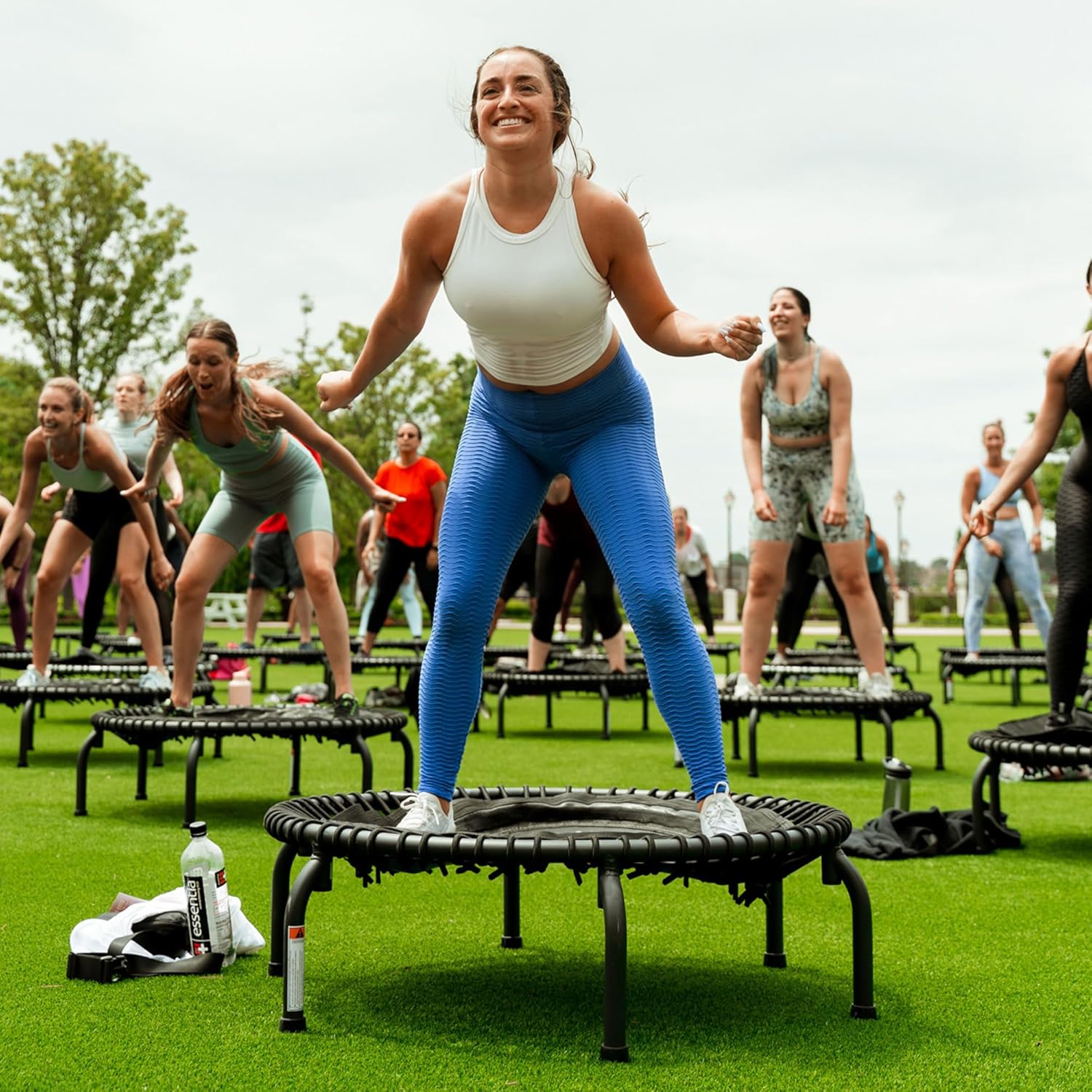 Click here for our favorite Rebounder pick
What is a Rebounder Trampoline?
A rebounder trampoline is a smaller, more portable version of a standard trampoline, designed for indoor workouts. Unlike larger backyard trampolines, rebounders are built with fitness in mind and are often used for cardio and strength training routines. They offer a controlled bounce, which is easier on joints and ideal for home workouts. To see my favorite pick, click here.
The Benefits of Using a Rebounder Trampoline
Click here for my favorite rebounder trampoline pick
Rebounders have become increasingly popular for their numerous health benefits, including:
- Improved Cardiovascular Health: Rebounding provides a heart-pumping workout that’s gentle on the joints, making it an excellent cardio option.
- Lymphatic Support: The up-and-down motion helps promote lymphatic drainage, which can support the body’s natural detox process.
- Core and Muscle Strengthening: Rebounding requires balance, engaging your core, legs, and glutes.
- Stress Relief: Rebounding can be a fun, mood-boosting workout that reduces stress and releases endorphins.
Types of Rebounder Trampolines
When choosing a rebounder, it’s helpful to know the different types available:
- Spring vs. Bungee Rebounders: Spring rebounders are often firmer, while bungee models offer a smoother, quieter bounce, which is gentler on the joints.
- Foldable vs. Non-Foldable Models: Foldable rebounders are easy to store and transport, while non-foldable ones tend to offer more stability.
- With or Without Handlebars: Some rebounders come with handlebars, which add extra stability. This feature is useful for beginners or those who need additional support during workouts.
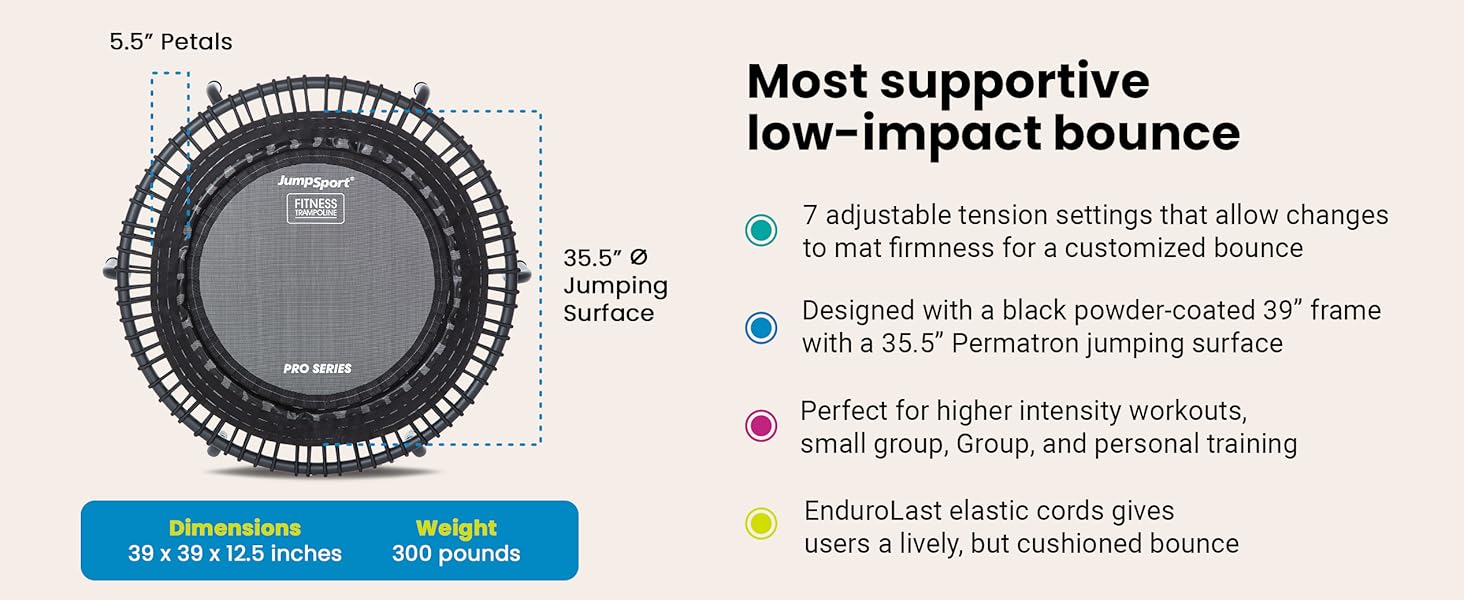
Click here for our favorite Rebounder pick
Key Considerations When Buying a Rebounder Trampoline
To choose the best rebounder for your needs, consider the following:
- Size and Weight Capacity: Choose a size that fits your available space and ensure the weight capacity matches the user.
- Bounce Quality: Look for models with high-quality springs or bungees to ensure a comfortable and effective workout.
- Durability and Build Quality: Opt for sturdy frames and materials that will hold up over time, especially if you plan to use the trampoline frequently.
- Safety Features: Look for safety additions like non-slip mats, stable frames, and protective coverings over springs or bungees.
Top Rebounder Trampolines for Home Workouts
Here are some of the best rebounder trampolines available for home use:
| Brand/Model | Features | Size | Price Range |
|---|---|---|---|
| Leaps & Rebounds | Quiet bungee cords, large bounce area, sturdy | 40 inches | Affordable |
| JumpSport 250 | Silent FlexBounce, stable no-tip frame, workout DVD | 250 sq. in bounce | Mid-range |
| JumpSport 350 PRO | Adjustable bounce firmness, durable, arched legs | 35.5 inches | Higher-end |
| MaXimus Pro | Foldable, comes with resistance bands, workout DVD | Compact | Mid-range |
| JumpSport 370 | Customizable tension, stable arched legs | 39 inches | Higher-end |
These models offer different features to suit a range of fitness needs and budgets. Each of them is known for stability, high-quality bounce, and additional features that enhance the workout experience.

Top Exercises for Your Rebounder Trampoline
Rebounders provide a variety of workout options that are low-impact yet effective. Here are some popular exercises:
- Basic Bounce: A simple exercise to warm up and engage the whole body.
- Jumping Jacks: These are great for increasing heart rate while toning arms and legs.
- High Knees: Improve balance and strengthen the core by alternating knee lifts.
- Jogging in Place: This cardio option mimics running while reducing impact on joints.
Rebounder Trampoline Maintenance and Safety Tips
To keep your rebounder in top shape, follow these maintenance and safety tips:
- Check for Wear and Tear: Regularly inspect bungees, springs, and the frame for any signs of wear.
- Use on a Stable Surface: Place your rebounder on a flat, stable surface to avoid tipping.
- Clean as Needed: Wipe down the mat and frame regularly to keep your equipment in good condition.
Frequently Asked Questions (FAQ)
What is the difference between a rebounder and a mini trampoline?
Both are small trampolines, but rebounders are specifically designed for fitness, providing a softer, low-impact bounce ideal for cardio and toning exercises.
Can a rebounder help with weight loss?
Yes, rebounders are excellent for weight loss because they provide a full-body workout that boosts cardiovascular health, builds muscle, and burns calories effectively.
Are rebounders safe for all ages?
Generally, yes, rebounders are safe for most ages, but children should use them under adult supervision.
How much space do I need for a rebounder trampoline?
Most rebounders need about 3-4 feet in diameter of floor space, plus enough clearance overhead for safe jumping.
Do rebounders require assembly?
Some models arrive fully assembled, while others require setup. Many brands provide tools or instructions to make assembly simple, but it’s best to check with the manufacturer.
Click here for our favorite Rebounder pick
Final Thoughts
Rebounder trampolines offer an effective, versatile way to work out from the comfort of home. With so many options available, you can easily find a model that fits your workout style, space, and budget. Whether you’re looking to improve cardio health, strengthen your core, or just have a bit of fun, a rebounder trampoline is a fantastic addition to any fitness routine.
In-Ground Trampoline Drainage: How to Keep Your Pit Dry and Safe
Installing an in-ground trampoline is a great way to blend fun and aesthetics into your backyard. But many homeowners quickly realize that digging a hole in the ground creates one major challenge: drainage. Without proper planning, your trampoline pit can turn into a muddy, flooded mess. This guide walks you through everything you need to know to ensure your in-ground trampoline stays dry, safe, and functional year-round.
Why Drainage Matters
-
Safety: Standing water can lead to rusted springs, mold growth, and slippery surfaces.
-
Structural Integrity: Saturated soil can erode or collapse around the trampoline frame.
-
Maintenance: Poor drainage means frequent cleaning and potential long-term damage.
Step-by-Step: How to Handle In-Ground Trampoline Drainage
1. Design the Pit with Drainage in Mind
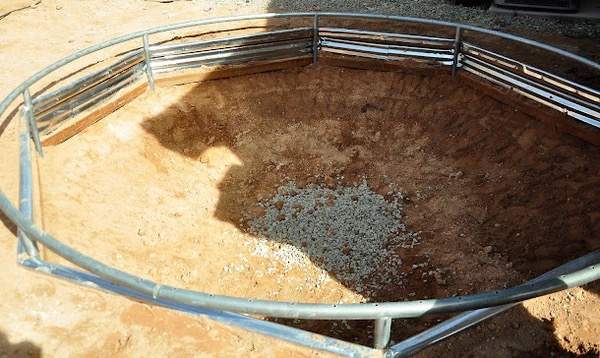
Dig the hole slightly deeper than the trampoline frame to allow room for gravel or a drainage system. The pit should also slope gently to one side to encourage water flow toward your drainage solution.
2. Add a Gravel Drainage Base
At the bottom of the pit, add 4 to 6 inches of crushed gravel. This allows water to filter through instead of pooling directly under the trampoline and provides a stable foundation.
3. Choose the Right Drainage System
Depending on your yard’s conditions, you’ll need one of these common solutions:
Option A: French Drain
-
What it is: A trench filled with gravel and a perforated pipe.
-
How it works: Redirects water away from the trampoline pit to a safe runoff area.
-
Best for: Slightly sloped yards or moderate drainage issues.
Option B: Sump Pump System
-
What it is: A pump installed in a basin at the lowest point of the trampoline pit.
-
How it works: Automatically pumps out water during rain.
-
Best for: Flat yards, heavy clay soil, or frequent flooding.
Option C: Dry Well (Soakaway Pit)
-
What it is: A buried container or gravel-filled pit that holds water and slowly disperses it.
-
How it works: Collects water and lets it gradually seep into the soil.
-
Best for: Yards with decent drainage and moderate rainfall.
4. Improve Drainage Around the Trampoline
Make sure the surrounding ground is graded so that water flows away from the trampoline area. You can also use swales, berms, or garden drains to keep surface water from entering the pit.
5. Ongoing Maintenance
-
Clear leaves and debris from gravel and drainage pipes.
-
Check for standing water after storms.
-
Test sump pumps every season to ensure they still function.
Bonus Tip: Use a Weather-Resistant Cover
When not in use, cover your trampoline to prevent rain from collecting in the pit. This simple step can significantly reduce water issues.
FAQs
Q: Can I just use gravel without any other drainage system?
A: Gravel helps with minor water control, but without a way to move water out of the pit, you’re still at risk for flooding.
Q: How do I know if I need a sump pump?
A: If your yard retains water after rain or your pit stays wet for more than 24 hours, a sump pump is a smart investment.
Q: Can I add drainage to an existing trampoline setup?
A: Yes, you can retrofit a French drain or sump pump into most existing pits without redoing the entire area.
Conclusion
In-ground trampolines are a sleek backyard upgrade—but without proper drainage, they can cause more headaches than joy. By planning your pit design carefully and using the right drainage method for your yard, you can ensure your trampoline stays safe, dry, and low-maintenance all year long.
How to Install an In-Ground Trampoline
Installing an in-ground trampoline can significantly enhance your backyard, creating a safer and more visually appealing play space. Here’s a detailed, step-by-step guide to help you smoothly complete the installation.
Step 1: Planning and Preparation
Choose an area with flat ground, ample surrounding space, and no underground utilities or significant tree roots. Verify local building codes or HOA guidelines to ensure your installation complies with any applicable regulations.
Tools and Materials Needed:
- Trampoline kit (frame, springs, mat, safety pads)
- Excavation equipment (shovel or mechanical excavator)
- Measuring tape
- Marking paint or stakes and string
- Retaining wall materials (treated wood, galvanized steel panels, or retaining wall blocks)
- Gravel or drainage pipe
- Leveling tool
- Backfill soil and turf
- Safety net enclosure (optional but recommended)
Step 2: Marking and Excavation
Using your assembled trampoline frame as a template, mark an area slightly larger than its dimensions (2-5 inches extra) to allow room for installation adjustments.
Carefully remove the top layer of grass or turf, setting it aside for later. Begin excavation, shaping the hole in a bowl-like form, with the deepest part in the center, adhering precisely to the depth recommendations provided by your trampoline manufacturer.
Step 3: Drainage Installation
Proper drainage is needed to prevent water accumulation beneath your trampoline. In areas that are prone to heavy rain or poor drainage, consider implementing one of these solutions:
- Soakaway Pit: Dig a pit approximately 2 feet by 2 feet at the hole’s deepest point, filling it with gravel to help disperse water naturally.
- Drainage Pipe: Lay perforated drainage pipe around the perimeter at the bottom of the hole, ensuring it slopes gently away from the trampoline area to direct water away efficiently.
Step 4: Building Retaining Walls
Construct robust retaining walls around the perimeter of your excavation to prevent soil erosion and maintain structural integrity. Here’s how to build a reliable retaining wall:
- Treated Wood: Use pressure-treated timber, ensuring boards are firmly secured using galvanized steel stakes or posts driven into the ground.
- Galvanized Steel Panels: Install metal panels designed specifically for in-ground trampoline installations, securing them with stakes or anchor systems provided by manufacturers.
- Retaining Wall Blocks: Stack interlocking blocks, starting at a firm base level, making sure to stagger each row for added stability. Backfill carefully as you build upward.
Step 5: Frame Assembly and Placement
Assemble the trampoline frame according to your manufacturer’s instructions, ensuring all connections are secure. Carefully lower the assembled frame into the excavated hole, ensuring it sits flush and level with the surrounding ground surface.
Step 6: Attaching Mat and Springs
Attach the jumping mat by evenly placing the springs. Begin by positioning springs at the 3, 6, 9, and 12 o’clock positions to evenly distribute tension. Then continue attaching the remaining springs uniformly around the trampoline frame.
Step 7: Backfilling and Finishing Touches
Fill the gaps between the trampoline frame and the excavation walls using the set-aside soil, compacting it firmly to ensure stability. Replace the saved turf around the trampoline edges, creating a seamless visual transition.
Step 8: Installing Safety Components
Attach safety pads securely over the springs and frame to protect jumpers from injuries. Installing a safety net enclosure around your trampoline is highly recommended, especially if children use it, to prevent accidental falls.
Step 9: Final Inspection
Perform a detailed inspection to ensure your trampoline is level, stable, and secure. Conduct a test bounce to verify proper functionality and safety.
The Lifespan of Springfree Trampolines: A Comprehensive Guide
Springfree trampolines stand out as a long-lasting, high-quality investment for families seeking a durable and safe backyard trampoline. With a lifespan of at least ten years—and often exceeding that with proper care—these trampolines are designed to withstand years of active use. Their innovative design, premium materials, and industry-leading ten-year warranty make them one of the most reliable options on the market.

Why Springfree Trampolines Last Longer
Springfree trampolines are built to outlast traditional spring-based trampolines by eliminating common points of failure. Unlike conventional models that use metal springs prone to rust and weakening over time, Springfree trampolines utilize flexible composite fiberglass rods, which are significantly more durable. The powder-coated steel frame is corrosion-resistant, and the UV-stabilized polypropylene mat resists weather-related wear and tear.
With rigorous testing that includes millions of simulated jumps and thousands of hours of exposure to extreme weather conditions, Springfree trampolines are engineered for longevity. Even after a decade of use, many units remain in excellent condition with minimal maintenance required.
Design Features That Enhance Durability
Springless Jumping Mechanism
Traditional trampolines rely on metal springs, which stretch and corrode over time, often needing replacement within a few years. Springfree trampolines replace these with composite rods positioned beneath the jumping surface, eliminating one of the most common failure points. These rods offer greater flexibility and durability, making them three times stronger than steel and resistant to wear.
Frame and Structural Integrity
The frame of a Springfree trampoline is constructed with galvanized and powder-coated steel, providing three layers of rust protection. Unlike traditional trampolines where the frame is exposed and susceptible to impact damage, Springfree’s frame is placed beneath the mat, shielding it from direct weather exposure and collisions.
UV-Stabilized Jumping Mat and Safety Net
Sun exposure is a major reason outdoor trampolines degrade. Springfree trampolines use a UV-stabilized polypropylene mat that withstands continuous sun exposure without fraying or weakening. The safety net is made using a high-strength lockstitch knitting method, similar to deep-sea fishing nets, making it more resistant to tearing and UV damage than standard trampoline enclosures
Cost vs. Lifespan: Is a Springfree Trampoline Worth It?
Although Springfree trampolines have a higher upfront cost, their long lifespan makes them more cost-effective than cheaper alternatives that require frequent repairs or replacements.
| Trampoline Type | Initial Cost | Avg. Lifespan | Cost per Year |
|---|---|---|---|
| Springfree | $1,200 – $2,500 | 10-15 years | $80-$250 |
| Premium Spring-Based | $850 – $1,500 | 8-10 years | $85-$188 |
| Mid-Range Spring-Based | $300 – $850 | 3-8 years | $100-$283 |
| Budget Spring-Based | $100 – $300 | 1-3 years | $100-$300 |
Considering the potential for over a decade of use, the cost per year of ownership is lower than most traditional models, making it a solid long-term investment.

Factors That Affect Springfree Trampoline Lifespan
Weather and Climate Conditions
While Springfree trampolines are built to endure all types of weather, prolonged exposure to extreme sun, heavy snow, or high winds can impact longevity. Using a weather cover and clearing off accumulated snow helps prevent unnecessary strain on the materials.
Frequency and Type of Use
Springfree trampolines are tested for millions of jumps, but excessive roughhousing, multiple jumpers exceeding weight limits can accelerate wear and tear. Following safety guidelines and ensuring proper weight distribution can extend the trampoline’s lifespan.
Installation and Maintenance
Proper assembly ensures structural integrity and longevity. Incorrect installation can lead to unnecessary stress on components. Regular inspections and minor upkeep, such as tightening bolts and cleaning the mat, help keep the trampoline in optimal condition.
How to Maximize the Lifespan of a Springfree Trampoline
✅ Clean the mat and net monthly using dish soap and water to prevent buildup of dirt and debris.
✅ Inspect the rods, frame, and netting every few months for signs of wear.
✅ Remove excess snow accumulation to avoid stress on the frame.
✅ Use a weather cover when the trampoline is not in use for extended periods.
✅ Check rod connections and bolts to ensure secure attachments.
While Springfree trampolines require minimal maintenance compared to traditional models, these simple steps can help keep them in top condition for well over a decade.
Common Questions About Springfree Trampoline Longevity
What happens if a part wears out after 10 years?
Springfree offers replacement parts for nets, mats, and rods, making it easy to maintain the trampoline even after the warranty expires.
Can I leave my Springfree trampoline outside year-round?
Yes, Springfree trampolines are designed for all-weather use, but using a weather cover and periodically checking for signs of wear can extend their lifespan.
How does Springfree compare to brands like Skywalker or Vuly?
- Skywalker trampolines are budget-friendly but typically last 3-6 years.
- Vuly trampolines offer good durability (8-10 years) but still use springs, making them more prone to wear than Springfree.
Do I need to anchor a Springfree trampoline?
In high-wind areas, anchoring is recommended to prevent movement or tipping during storms.
Can I install a Springfree trampoline myself?
Yes, DIY installation is possible with 2-3 people and typically takes 2-3 hours. Professional installation is available for those who prefer assistance.
Final Thoughts: Is a Springfree Trampoline a Good Investment?
For families looking for a safe, durable, and low-maintenance trampoline, Springfree is among the best choices on the market.
✅ Lasts 10-15+ years, outlasting most traditional trampolines.
✅ Safer design with no metal springs or exposed frame.
✅ Minimal maintenance with high-quality, weather-resistant materials.
✅ 10-year comprehensive warranty covering all parts.
While the upfront cost is higher than many traditional trampolines, the long-term savings on repairs and replacements make it a worthwhile investment. When evaluated on a cost-per-year basis, Springfree offers better value than most other trampoline brands.
For those seeking a trampoline that lasts well beyond the competition, Springfree is a clear winner.
How Long Do Trampolines Last?
When you’re investing in a trampoline, one of the biggest questions is: “How long will this last?” After all, you want to make sure it’s not only worth the money but also safe and enjoyable for years to come. The good news? The lifespan of a trampoline can vary greatly depending on its quality, usage, and how well it’s maintained. A cheap trampoline might need replacing after just a couple of years, while a premium one can last well over a decade.
In this guide, we’ll break down what determines how long a trampoline will last, what you can do to extend its life, and how to spot when it’s time to replace it.

How Long Do Trampolines Typically Last?
The lifespan of a trampoline depends on its build quality and care. Here’s a general breakdown:
- Cheap trampolines: 1-3 years
- Average trampolines: 3-8 years
- Premium trampolines: 5-10+ years
- Springfree trampolines: 10+ years with proper care
Premium trampolines often justify their price tags by using high-quality materials and offering warranties that reflect their durability. However, even the best trampolines need regular maintenance and protection from the elements to live up to their full potential.
The Key Factors That Affect a Trampoline’s Lifespan
Quality of Materials
The materials a trampoline is made from are the biggest factor in determining how long it lasts. A high-quality trampoline includes:
- Galvanized steel frames: Frames coated with zinc resist rust and corrosion, making them far more durable, especially in humid or coastal environments.
- High-strength polyester nets: Knot-free and tightly woven nets last longer and provide better safety.
- UV-resistant materials: Mats, nets, and padding exposed to the sun degrade quickly without UV protection.
- Sturdy springs or rods: Springs lose their tension over time, so durable, rust-proof springs or springless designs help maintain bounce.
Trampolines built with these features not only last longer but are also safer to use.
The Impact of Weather and Environment
Where you live and how you protect your trampoline from the elements can dramatically impact its lifespan.
- UV light is the leading cause of material breakdown. Prolonged exposure to the sun weakens mats, nets, and padding.
- Harsh weather like heavy rain, snow, and extreme wind can cause structural damage or rust over time.
- Coastal areas with salt in the air accelerate rusting on the trampoline’s frame if it’s not well-protected.
How to protect it:
- Use a sunshade or weather cover to shield the trampoline.
- Place the trampoline in a shaded area when possible.
- Store it or secure it properly during storms, snow, or high winds.
How Often and How It’s Used
The frequency and intensity of use also determine how quickly a trampoline wears out.
- A trampoline used daily by multiple kids will naturally wear faster than one used occasionally.
- Exceeding the weight limit puts extra stress on the springs, mat, and frame, leading to quicker deterioration.
- Trampolines tested for millions of jumps, like Springfree Trampolines, tend to have the longest lifespans.
If you want your trampoline to last, set some ground rules:
- Limit the number of jumpers at a time.
- Ensure no one exceeds the trampoline’s weight limit.
- Encourage safe play to minimize wear and tear.
Maintenance Makes All the Difference
Regular care and maintenance can add years to your trampoline’s life. Even the highest-quality trampolines need some upkeep:
- Clean regularly: Remove debris and clean the mat with mild soap and water. Avoid harsh chemicals.
- Inspect for damage: Check the mat, springs, net, and frame for wear or rust. Replace damaged parts immediately.
- Secure during bad weather: Use covers, anchors, or disassemble and store your trampoline during storms or heavy snow.
- Replace worn parts: Over time, springs, mats, and nets will wear out. Replacing them as needed keeps the trampoline safe and usable.
With proper maintenance, even a mid-range trampoline can last far longer than its advertised lifespan.
How to Make Your Trampoline Last Longer
If you’ve invested in a trampoline, it’s worth taking a few extra steps to ensure it holds up for years of fun:
- Install the trampoline properly, following the instructions carefully.
- Clean it once or twice a month to keep it free of debris and buildup.
- Use weather-related accessories like sunshades, weather covers, or anchors.
- Set rules for usage, such as no roughhousing or exceeding weight limits.
- Inspect it regularly for wear, rust, or damage.
- Replace worn parts like nets, springs, or mats as soon as issues appear.
- Choose a high-quality trampoline from the start if you expect frequent use.
These simple steps can add years to your trampoline’s life and ensure it remains a safe, fun space for your family.
Why Springfree Trampolines Stand Out
Springfree Trampolines are designed to last longer than traditional trampolines. With:
- A 10+ year lifespan backed by a full 10-year warranty on all parts.
- Materials that are UV-resistant and triple-coated to resist rust.
- Rigorous testing to withstand up to 3 million jumps.
If longevity, safety, and low maintenance are priorities, investing in a Springfree Trampoline can offer peace of mind and value for your money.
When to Replace Your Trampoline
Even with the best care, trampolines don’t last forever. Here are signs it might be time to replace yours:
- The mat is torn, sagging, or no longer bounces properly.
- Springs are rusted, broken, or lose their tension.
- The frame shows signs of bending, rusting, or instability.
- The safety net is torn or doesn’t stay secure.
- Excessive creaking or movement indicates structural issues.
Safety should always come first. If you notice these problems and replacing parts isn’t enough, it’s time to consider getting a new trampoline.
Final Thoughts
How long a trampoline lasts comes down to its quality, how it’s used, and how well it’s maintained. While cheap trampolines may only last a couple of years, a high-quality trampoline with proper care can provide fun for over a decade.
Protect your investment by choosing a durable trampoline, following maintenance tips, and shielding it from harsh weather. Your trampoline can remain a backyard staple for years of safe, joyful jumping.
If you’re ready to invest in one of the longest-lasting options, check out our ultimate trampoline buying guide for recommendations that suit any budget and lifestyle.
Can You Jump on a Trampoline While Pregnant?
Pregnancy brings many changes to your body, and choosing the right activities becomes essential for your safety and your baby’s health. Jumping on a trampoline poses specific risks during pregnancy. Below, we break down the key considerations, safety concerns, and alternatives for staying active while expecting.
Is Jumping on a Trampoline Safe During Pregnancy?
In general, trampolining is not recommended during pregnancy due to the following factors:
- Increased Risk of Falling: The vigorous bouncing involved in trampolining increases your risk of losing balance and falling, which could harm both you and your baby.
- Weakened Stability: Pregnancy hormones like relaxin loosen ligaments and joints, which make people more prone to injuries such as sprains or pelvic instability.
- Shifting Center of Gravity: As pregnancy progresses, a growing belly changes balance, making activities like trampolining harder to control.
Key Risks by Pregnancy Trimester
First Trimester
- What’s Happening: Your body may still feel relatively normal, and your center of gravity hasn’t changed significantly.
- Risks:
- Hormonal changes can affect joint stability and increase the risk of dizziness and falls.
- Even if the baby is small and well-protected, a fall could result in injuries to you.
- Should You Jump?: It’s better to avoid trampolining, but if you must, keep it low-intensity and consult your doctor first.
Second and Third Trimesters
- What’s Happening: Your belly grows, your center of gravity shifts, and balance becomes more challenging.
- Risks:
- Falling can result in severe complications, such as placental abruption or premature labor.
- The impact of jumping can strain weakened pelvic floor muscles, increasing the risk of incontinence or pelvic organ prolapse.
- Should You Jump?: No. The risks far outweigh any benefits at this stage.
Common Concerns About Jumping While Pregnant
- Will the Bouncing Hurt the Baby?
- The baby is cushioned inside the uterus and is not affected by gentle rocking or bouncing. However, the risk of falling or abdominal trauma makes trampolining unsafe.
- What About Light Bouncing or Rebounding?
- Even low-intensity bouncing can compromise your balance and increase the risk of injury, especially later in pregnancy. Always discuss any activity with your doctor.
Safer Alternatives to Trampolining
If you’re looking to stay active during pregnancy, consider these low-risk, pregnancy-safe exercises:
- Prenatal Yoga: Helps improve flexibility, balance, and relaxation.
- Walking: An easy and effective way to maintain cardiovascular health.
- Swimming: Reduces stress on joints while offering a full-body workout.
- Stationary Cycling: A low-impact way to keep moving without risking falls.
Tips for Staying Active Safely During Pregnancy
- Listen to Your Body: Stop immediately if an activity feels uncomfortable or unsafe.
- Consult Your Healthcare Provider: Always seek professional advice before starting or continuing any exercise during pregnancy.
- Focus on Low-Impact Exercises: Prioritize activities that minimize the risk of falling or injury.
- Avoid High-Risk Activities: Activities with potential for trauma or instability, like trampolining, horseback riding, or contact sports, should be avoided.
Final Verdict
While trampolining might seem like a fun way to stay active, the risks during pregnancy—especially in the second and third trimesters—are too significant to ignore. Opt for safer, low-impact exercises to support your health and your baby’s development. Always consult a doctor or midwife before deciding about physical activity during pregnancy.
Trampoline Safety: Are They Really Safe for Kids?
Trampolines bring kids hours of energy-burning fun and can even support balance, coordination, and fitness. But as any parent knows, they also come with risks. According to pediatric safety research, the majority of trampoline injuries involve falls, collisions, or contact with springs and frames. That doesn’t mean trampolines are unsafe by default—it means families need the right knowledge, equipment, and supervision.
This guide draws on safety recommendations from pediatricians, consumer safety organizations, and trampoline manufacturers to help you make confident, informed decisions.
Must-Have Safety Features
When choosing a trampoline, prioritize models that incorporate modern safety innovations.
1. Safety Enclosure Nets
A high-quality net is essential to prevent falls. Look for:
-
UV-resistant mesh (to withstand sunlight and weather)
-
A secure entry system (zippers or overlapping closures that kids can’t easily leave open)
-
Nets that attach directly to the mat, leaving no gaps where children could slip through
2. Protective Padding
Thick, weather-resistant padding should cover all springs and frame edges. This reduces the chance of sprains, cuts, or pinches if a child missteps.
3. Stable Access
A wide, non-slip ladder or step system helps children climb safely. For younger kids, choose models with low-to-the-ground access.
Choosing the Right Trampoline
The best trampoline for your family depends on your children’s ages, space, and usage.
-
Size & Weight Capacity: Match the trampoline to the number of children and their ages. Exceeding the recommended weight capacity is a major cause of accidents.
-
Durability: Look for galvanized steel frames, UV-treated nets, and mats tested for high bounce cycles.
-
Brand Reputation: Established brands like Springfree, Skywalker, Acon, and Little Tikes (for toddlers) consistently earn praise for their engineering and compliance with international safety standards.
| Brand / Model | Design | Key Safety Features | Weight Capacity | Best For | Certifications |
|---|---|---|---|---|---|
| Springfree (Round & Oval) | Springless rods (no metal springs) | Hidden frame, SoftEdge shock-absorbing mat, tall FlexiNet enclosure | ~220 lbs per jumper / 1100+ lbs total | Families prioritizing top-tier safety | ASTM, Australian Standards |
| Vuly Thunder Pro (Australia) | Leaf-spring system | Self-closing zipperless net, frame hidden under mat, UV-treated materials | 300 lbs per jumper / 1650 lbs static load | Outdoor families in harsh weather climates | CE, ASTM-equivalent |
| JumpFlex Hero | Steel frame with 80–100 springs | Dual-ring frame, thick foam padding, 360° zippered net, padded curved poles | 550 lbs per jumper | Families needing durability & long warranties | ASTM compliant |
| Acon Air/HD Series (Europe) | Heavy-duty coil springs | Extra-strong galvanized frame, tall net, SafeMat UV mat | No single-user limit / 1650 lbs tested | Serious users, older kids/teens, gymnastic training | ASTM, CE |
| Skywalker | Coil springs with “No-Gap” design | Patented gap-free enclosure system, padded poles, rust-resistant steel frame | 200–800 lbs (depending on size) | Budget-friendly safety-conscious families | ASTM |
| SkyBound Rocket (Mini) | Springs with foam handle | Padded handle, thick PVC pad, ASTM toy safety certified | Up to 220 lbs | Toddlers & small children indoors | ASTM F963, AS4989 |
| Little Tikes (3–7 ft) | Springs or plastic coil | Enclosure nets for larger models, foam-padded bars, low height | 55–100 lbs | Toddlers (ages 3–6), indoor/outdoor play | Toy safety standards |
Safe Setup Practices
Where you place your trampoline is as important as the model you buy.
-
Choose Level Ground: Set up on grass or a soft surface—not concrete. Keep the area free of nearby trees, fences, or furniture.
-
Anchor It: Use ground stakes or sandbags to prevent tipping or movement in high winds.
-
Clear Below: Never allow children or pets to play beneath the trampoline while it’s in use.
Rules for Safer Jumping
Rules make the difference between safe fun and preventable injuries. Experts recommend:
-
One Jumper at a Time: Reduces collisions and “double-bounce” injuries.
-
No Flips or Somersaults: These moves require trained supervision to avoid head and neck injuries.
-
Stay Centered: Encourage kids to jump in the middle, away from springs and edges.
-
Active Supervision: An adult should always be present, enforcing rules and watching for unsafe behavior.
Ongoing Maintenance
Regular upkeep extends the life of your trampoline and keeps it safe:
-
Inspect Often: Replace torn mats, frayed nets, or broken springs immediately.
-
Clean Surfaces: Remove leaves and debris that can create slip hazards.
-
Weather Protection: Use covers or dismantle nets during harsh weather to prevent premature wear.
Optional Safety Accessories
-
Padded Basketball Hoops: If you want extra play options, choose accessories designed specifically for trampolines.
-
Shade Covers: Protect kids from UV exposure while they jump.
-
Anchor Kits: Essential in windy regions.
Understanding the Risks
Even with precautions, trampolines carry risks. The most common include:
-
Falls off the trampoline (why nets are critical)
-
Collisions with other jumpers (solved by the one-at-a-time rule)
-
Improper landings on springs or frames (padding reduces this)
-
Underneath play hazards (kids must be kept out from under the mat)
Knowing these risks helps you stay proactive in preventing them.
Frequently Asked Questions
Are trampolines safe for kids?
Yes—when used responsibly. Choose a trampoline with a safety net, strong padding, and enforce the “one child at a time” rule.
What surface should I place it on?
Level grass is best. Avoid hard surfaces like pavement. Adding mulch or sand underneath further reduces impact.
What’s the right age to start?
Most experts recommend trampolines for children over 6 years old, though toddler-specific models (with lower heights and handles) exist for younger ages.
Do injuries always require a doctor?
Minor sprains may be treated at home, but fractures, head, or neck injuries require immediate medical attention.
Final Thoughts
Trampolines can be a wonderful way for kids to play, get exercise, and enjoy time outdoors. But safety must come first. By investing in a well-designed model, setting it up correctly, and enforcing simple rules, you can give your family the joy of trampolining while minimizing risks.
A little planning and ongoing supervision go a long way—turning trampoline time into safe, happy, healthy play.