Springfree vs Spring Trampolines: A Nuanced, Real-World Comparison (Safety, Bounce, Durability, and Hidden Costs)

The core choice between a spring trampoline and a Springfree trampoline isn’t really about brand — it’s about which engineering philosophy matters more to you. Spring trampolines use metal coils to create that classic bouncy pop. Springfree replaces those coils with flexible composite rods positioned below the jumping surface, removing the hard edges and pinch points that cause most equipment-related injuries.
Neither is unconditionally “better.” The right choice depends on who’s jumping, how they jump, and what you’re optimizing for. This guide covers every meaningful difference — without the marketing spin from either side.
Quick answer: Choose Springfree if safety and long-term durability are your top priorities, especially for younger children. Choose a premium spring trampoline if you have older or athletic jumpers who want a snappy, high-performance bounce and simpler assembly.
1. Safety: Hard-edge risk vs. the SoftEdge design
How traditional spring trampolines handle safety
The core safety problem with spring trampolines isn’t that springs exist — it’s that the springs and frame share the same horizontal plane as the jumper. Even on premium models with thick padding, the entire safety system depends on consumables performing perfectly: pads staying centered (they shift), foam staying thick (it compresses and degrades over time), UV-resistant coatings holding up (they eventually don’t), and gaps staying closed (they open).
The most dangerous moment is often when pads have aged just enough to look fine but compress to almost nothing under a falling child — meaning the frame is essentially exposed again, just without looking obviously worn out.
How Springfree handles safety
Springfree’s biggest safety advantage is geometric: move the frame below the jumping surface and make the perimeter flexible. That single design decision does three things simultaneously — it eliminates the metal impact perimeter, eliminates spring pinch and laceration hazards, and eliminates the “falling into the spring gap” failure mode because the net-to-mat interface is fully integrated.
One non-obvious tradeoff: Springfree’s flexible edge is not a stable platform. It moves. If your family tends toward social trampoline sessions where one child stands at the edge while another bounces, Springfree can actually destabilize the waiting child more than a traditional model with thick, rigid pads would.
What no trampoline can fix
Springfree reduces equipment-related injury modes — frame and spring contact, net failures, gap entrapment. It does not reduce behavior-related injury modes: mid-air collisions between two jumpers, bad landings on flips, or the general chaos of “one more trick.” If your household doesn’t enforce one-jumper-at-a-time rules, treat any safety improvement as risk reduction, not as “safe.” For the full picture on trampoline safety, see our guide on are trampolines really safe.
2. Enclosure dynamics: Stop vs. catch-and-redirect
Spring trampoline enclosures
Most spring trampolines use rigid vertical poles — steel or fiberglass wrapped in foam sleeves — with a net attached by clips or straps. This works, but the system has three persistent weak points: the rigid poles become a hard target in a sideways fall, the net attachments are a failure point over years of UV and mechanical stress, and the lower edge can become a slide-under gap if the skirt isn’t properly maintained. The foam pole sleeves provide psychological comfort to parents more than actual concussion protection — foam doesn’t stop a head moving at real speed.
Springfree’s FlexiNet enclosure
Springfree’s net support rods are flexible, not rigid. When a jumper hits the net, the system absorbs and returns them toward the center rather than acting as a wall. In real use this feels noticeably different and meaningfully smarter — the net is a dynamic deceleration system, not just a barrier. It’s one of the places where the Springfree design advantage is most obvious in everyday use rather than just on paper.
3. Bounce feel: Snappy athletic pop vs. smooth controlled rebound
Premium spring trampolines (ACON, AlleyOOP-style)
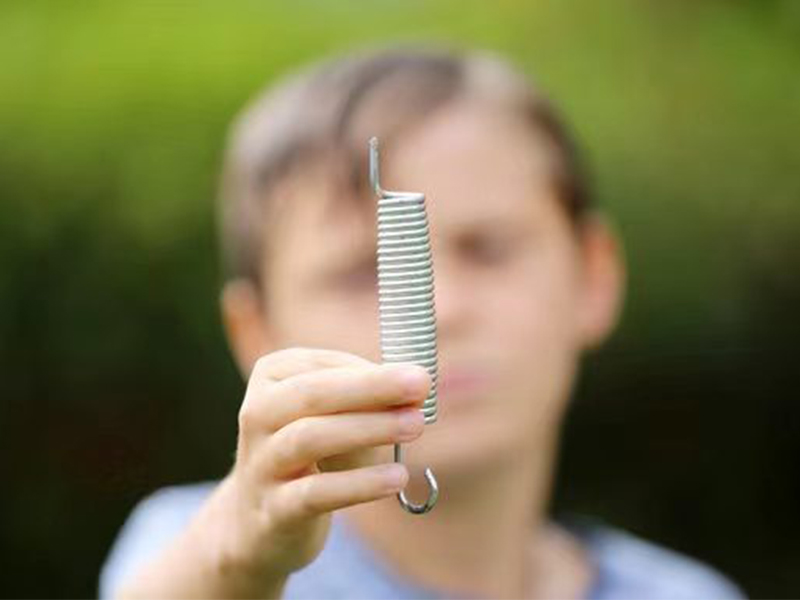
Steel springs do something very specific well: quick rebound with a snappy feel, consistent vertical trajectory, strong pop for tricks, and minimal damping so the surface stays lively. Pair that with a high-airflow mat and you get the sensation gymnasts and trick jumpers describe as “athletic.” Spring length matters more than most buyers realize — longer performance springs create a deeper deformation curve that prevents the harsh bottoming-out feel you get from short, cheap springs.
Springfree’s composite rods
The composite rods produce a smoother, softer rebound that reduces harsh jolt at the bottom of the bounce. Users describe it as “controlled” or “forgiving” — or, if they’re coming from a spring trampoline, sometimes “muted.” The rods also introduce a small lateral flex component in the geometry. For casual jumping you’ll never notice it. For a teenager training precision landings on flips, that tiny lateral component can feel slightly off when trying to stick a trick.
The practical translation: for a child aged 6–10 who mostly just jumps? Springfree’s bounce feels great. For an older athletic user who wants gym-like responsiveness for trick training? A premium spring trampoline usually wins. See our heavy-duty trampolines for adults guide if performance is the priority.
4. Usable jumping space: The hidden square footage difference
Spring trampolines
A “15-foot” spring trampoline is measured frame-to-frame. The actual usable jumping surface is smaller because springs, pads, and the dead zone near the perimeter where the bounce quality drops off all eat into that measurement. In practice, the effective jumping area on a 15-foot spring trampoline is meaningfully less than 15 feet of usable bounce surface.
Springfree
A “15-foot” Springfree gives you close to the full 15-foot jumping surface because the entire mechanism — rods, frame, enclosure supports — sits outside the mat boundary. In a constrained yard, Springfree often delivers more real bounce area per footprint than a same-spec spring trampoline. Buyers frequently compare what look like equal sizes when they’re actually not.
5. Installation reality: Repetitive but simple vs. physically demanding
Spring trampolines
Assembly follows a predictable sequence: build the frame, use a spring pull tool, attach springs in a cross pattern and fill in. It’s physical work but it’s intuitive and most people complete it in 2–3 hours with two people. Parts are universally available and the process is the same across most brands.
Springfree
The composite rods are stiff by design — that stiffness is what creates the bounce. Installing them means bending each one under high tension into the mat cleats. Early rods feel manageable. By the final third, many installers describe it as “this is impossible.” If you don’t follow the correct installation sequence, you can end up in a position where the last few rods physically cannot be attached from the leverage angle you’re in.
The difference between success and giving up is usually technique: use your bodyweight and core rather than arm strength, and follow a sequence guide or video before starting. Springfree also offers 3D guided assembly instructions through the BILT app, which is genuinely useful. That said, Springfree installation has a hidden cost — either in time and physical effort if you DIY unprepared, or in professional installation fees if you hire out.
6. Durability and weather: Rust cycle vs. UV plastics cycle
Spring trampolines
The long-term enemies of a spring trampoline are predictable: spring rust (worst at the hook friction points where galvanizing wears first), pad UV degradation (often the first visible failure, usually within 2–4 seasons of outdoor use), net replacement, and spring creep — the gradual, uneven loss of tension that makes the surface bounce inconsistently before anything actually breaks. Springs don’t die suddenly; they degrade slowly in a way that’s easy to miss until the bounce feels noticeably off.
Springfree
No spring rust. The composite rods don’t corrode, which is a meaningful advantage in coastal or high-humidity environments. Springfree has its own aging profile though: the protective sleeves around the composite rods can crack and flake under strong UV over many years, and the plastic cleats that anchor the rods can become brittle with age. Cracked sleeves can look alarming before they represent a structural failure — it’s more cosmetic deterioration than immediate safety risk in most cases, but it warrants inspection to confirm the difference. The 10-year full-parts warranty on Springfree models provides meaningful coverage that no spring trampoline brand currently matches.

7. Total cost of ownership: Ongoing replacements vs. large upfront investment
Spring trampolines cost less to buy but more to maintain. Pads typically need replacement every 2–3 seasons, nets every 3–5 years, and springs periodically. Over a decade, a mid-range spring trampoline owner can easily spend $300–$600+ in replacement parts on top of the original purchase price.
Springfree costs significantly more upfront — often 2–3x a comparable-size spring trampoline — but typically avoids the constant replacement cycle if the trampoline is used normally and the warranty is maintained. The other cost factor worth considering is resale value: used spring trampolines frequently end up listed as “free, you haul it” because the frame is structurally fine but all the consumables are worn. Used Springfree trampolines tend to hold meaningful resale value because buyers trust the frame and rod system is still viable.
For a full breakdown of trampoline pricing by brand and tier, see our trampoline cost guide.
8. Noise: Squeak culture vs. stealth bounce
Metal springs create audible squeaks and creaks during use — metal-on-metal friction at every attachment point. You can reduce it with lubrication, but grease attracts dirt and needs periodic reapplication. For most suburban backyards it’s a minor background nuisance. In a denser neighborhood, or for a household where the trampoline is used in early morning or evening hours, it adds up.
Springfree’s composite rod system is noticeably quiet. No metal contact means no squeaks. This is one of the smaller practical differences, but it’s one that Springfree owners mention consistently — the trampoline just feels more premium in daily use because of it.
Who should choose which?
Choose Springfree if:
- Reducing equipment-related injury risk is your top priority — especially for younger children
- You live near the coast or in a high-humidity environment and want to avoid rust degradation
- Your yard is constrained and you want maximum usable bounce area per footprint
- You value long-term durability and low replacement part frequency over upfront cost
- Noise matters — neighbors, early use, proximity to the house
- You want strong resale value if you move or upgrade
Choose a premium spring trampoline if:
- Your jumpers are older teens or athletic users who want a snappy, gym-like bounce for tricks and skill training
- You want a simpler DIY assembly process
- Budget is a primary constraint and you’re comfortable managing replacement parts over time
- You want the widest possible selection of sizes, shapes, and price points
- Your kids are serious about gymnastics and want linear, high-energy vertical bounce
For full model picks in both categories, see our Springfree trampoline buying guide, our best rectangle trampolines for athletic spring options, and our best trampoline brands overview for how all major manufacturers compare.
The honest summary
Springfree is safer by geometry, not by better padding — the design removes the hard contact zones rather than covering them up. Traditional spring trampolines can be very safe if pads and nets are treated as real safety components and replaced on schedule, not left until they visibly fail. Springfree’s flexible edge is not a stable standing zone. Springfree installation is more physically demanding than most buyers expect. Spring trampolines age through consumable failure (pads, nets, springs). Springfree ages through UV plastics and rod sleeves, which look alarming cosmetically before becoming structurally relevant. Athletes prefer springs; families with young children typically prefer Springfree’s forgiving geometry.
Both choices involve real tradeoffs. The right answer depends on your household.
Frequently Asked Questions
Is a Springfree trampoline safer than a regular trampoline?
Yes — by design geometry, not just better padding. Springfree removes the frame from the jumper’s contact zone and eliminates the spring perimeter, which are the two most common hard-contact injury sources. It does not reduce behavior-related injuries like collisions between multiple jumpers. One-at-a-time rules still matter on any trampoline. For the full safety data, see our trampoline safety guide.
Does Springfree bounce as high as a spring trampoline?
Generally, no. Premium spring trampolines produce a snappier, more powerful pop that athletes typically prefer. Springfree’s composite rods produce a smoother, more controlled bounce that feels great for casual and younger jumpers but can feel muted to experienced gymnasts. For athletic training, a premium spring trampoline from ACON or AlleyOOP usually wins on raw bounce performance.
How much does Springfree cost vs. a regular trampoline?
Springfree starts around $1,000–$1,200 and runs up to $3,000+ for the largest models. Quality spring trampolines range from $200–$1,500 depending on size and brand. Over a decade, the total cost difference narrows significantly once you account for spring trampoline replacement parts — pads, nets, and springs. Our full trampoline cost guide covers the long-term math.
Is Springfree harder to assemble?
Yes, notably. The composite rods must be bent under high tension in a specific sequence. If you skip the sequence guide, the last few rods can become very difficult to install. Most buyers who struggled did so by starting without watching a video or reading the installation guide first. Springfree’s BILT app 3D instructions are the best available resource for this.
What does Springfree use instead of springs?
Glass-fiber composite rods mounted beneath the jumping surface, angled outward from the mat edge. The frame is also repositioned entirely below the mat level. The enclosure uses flexible net rods (FlexiNet) rather than rigid poles. The result is a trampoline with no exposed metal contact points in the entire jumping zone.
Which is better for gymnastics — spring or Springfree?
For serious gymnastics and trick training, most athletes prefer a premium spring trampoline. The linear, snappy bounce of high-tensile steel springs gives better vertical energy return and trajectory consistency. Springfree’s slight lateral flex in the rod geometry is imperceptible to casual jumpers but noticeable to athletes working on precision landings.